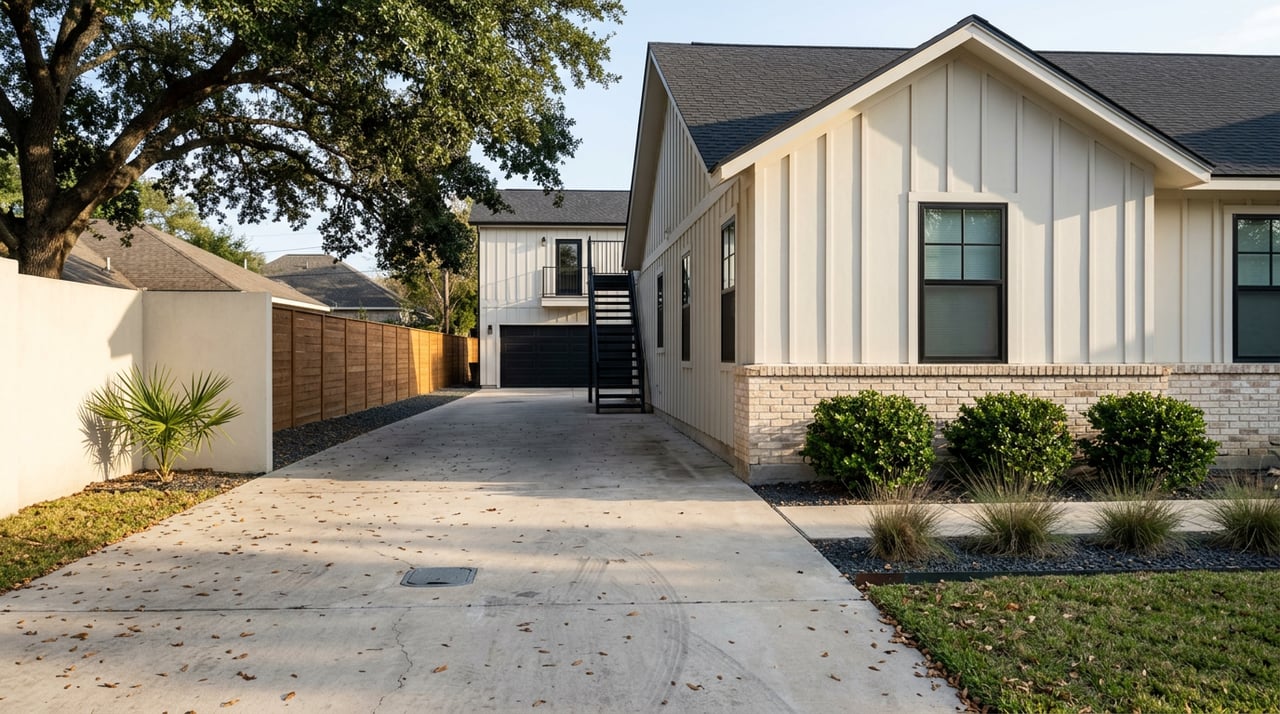
Thinking about investing closer to home but want real numbers and a clear plan? Acres Home gives you larger lots, active infill building, and price points where a well-run project can work. If you are a Houston local, you already know the value of neighborhood familiarity and quick drive times. In this guide, you’ll get a practical playbook to underwrite rentals, plan rehabs or small new builds, and de-risk each step. Let’s dive in.
Why Acres Home attracts locals
Acres Home is a roughly 9 square mile super neighborhood in northwest Houston with an older housing stock, scattered vacant parcels, and increasing infill activity. The City’s profile outlines its history, development pattern, and boundaries so you can orient by block before you comp anything. You can review the official neighborhood overview in the City’s Super Neighborhood report for context on housing units and lot patterns. For background, see the City of Houston’s Acres Home profile.
- Source: Review the City’s description of lot patterns and development history in the Acres Home Super Neighborhood document from the City of Houston.
What the numbers say today
Pricing varies by subarea and condition. Public data aggregators commonly show price per square foot in the roughly 125 to 200 dollars per square foot range in Acres Home, with higher figures for newer infill product and lower figures for older, larger-lot homes. Use a tight radius and same-condition comps for accuracy. See neighborhood-level pricing snapshots on Properazzi for a high-level reference.
For quick rent checks, zip-level medians offer a starting point only. Recent snapshots for the main Acres Home zip codes often land near the upper teens to low two-thousands for 2 to 4 bedroom homes. Always build block-level rental comps before you finalize underwriting.
Build a conservative pro forma
Underwriting well is how you protect returns. Work block by block and keep assumptions realistic.
Step 1: Rent comps
- Pull 3 to 6 active rental comps within a half to one mile, same beds, similar condition, and similar lot utility.
- Treat zip medians as a rough guide, not a target.
- Use a separate vacancy assumption. A 5 to 8 percent vacancy and collection loss is a conservative range for stabilized single-family rentals in Houston micro-markets.
Step 2: From gross to net
- Include property management, maintenance and turns, taxes, insurance, utilities if owner-paid, and reserves.
- Typical single-family management runs about 8 to 12 percent of collected rent.
- Budget maintenance and capital reserves each month. Older homes need more.
Step 3: Taxes and insurance
- Harris County effective property tax rates commonly land around 2.0 to 2.7 percent of assessed value, but the only number that matters is your parcel’s actual taxing units. Pull the tax record and rate stack directly on HCAD.
Step 4: Return targets
- Small single-family rental cap rates in Sun Belt markets have often traded in the mid to high single digits, but micro-market outcomes vary. Use closed sales to back into a local cap rate and stress test for lower rent and higher taxes or insurance. For context on observed SFR cap rate ranges, review this market analysis.
Pro tip: Model a base case and a stressed case with 1 to 2 percent worse rent, plus higher taxes or insurance, to make sure the deal still works.
A quick worked example
- Inputs: purchase price 300,000 dollars; monthly rent 2,000 dollars; gross annual rent 24,000 dollars.
- Assumptions: vacancy 6 percent (1,440), property management 10 percent of rent (2,400), maintenance and reserves 8 percent (1,920), taxes at 2.3 percent of value (6,900), insurance 1,200 per year, other 600 per year.
- NOI: 24,000 minus (1,440 + 2,400 + 1,920 + 6,900 + 1,200 + 600) equals 9,540. Implied cap rate equals 9,540 divided by 300,000 equals 3.18 percent.
Takeaway: taxes and reserves can compress returns on lower-price homes. To improve the outcome, negotiate price, lift rent through targeted upgrades, or add density where permitted.
Rehab vs. new construction
You will see three common plays in Acres Home: light-to-medium rehabs on mid-century homes, heavier value-add projects, and small infill new builds.
Rehab budgets and when it wins
- Minor cosmetic rehabs often run about 10,000 to 40,000 dollars, medium value-add can run 40,000 to 150,000 dollars, and large structural or mechanical projects can exceed 150,000 dollars.
- Always add a 10 to 20 percent contingency on older houses.
- Rehab can get you to cash flow faster if the structure is sound and major systems are intact. See national remodel cost ranges here.
New build costs and fit
- Small infill single-family builds with production-grade finishes in Houston often price around 150 to 300 plus dollars per square foot for the structure, not including land, site work, and soft costs. Lot prep, utilities, and permitting add to the total.
- New builds often command higher rents and lower near-term maintenance. Review a local builder’s guidance on cost ranges.
Timeline and permitting
- The City of Houston routes residential plans through multi-department review. An initial residential plan review window is often cited around 15 business days for the first review, but platting, floodplain checks, or corrections can extend timelines.
- A small infill build commonly takes 4 to 9 months from permit to certificate of occupancy, depending on weather and contractor capacity. Learn more at the City’s development regulations page.
Lot strategy and small-scale density
Acres Home’s historic acre-based pattern means you will encounter 6,000 to 12,000 square foot single-family lots and occasional half-acre to one-acre parcels. Opportunities include subdividing, replatting, or assembling adjacent parcels for multiple units, subject to deed restrictions and City development rules. Pull plat records and tax data early and confirm driveway, utility taps, and lot coverage with the Permit Center. Start parcel-level due diligence on HCAD and review City development regulations before you offer.
Risks to model and how to blunt them
- Flood and stormwater: Check FEMA flood maps and seller history for prior claims. Elevation and insurability drive both underwriting and design.
- Property taxes: Verify the exact taxing entities and current assessed value. Model what taxes look like at your post-rehab or post-build value.
- Construction cost and time: Material and labor volatility can shift budgets. Lock bids where possible and keep a contingency.
- Neighborhood dynamics: Crime and tenant selection factors vary by block. Factor conservative vacancy and reserves, and lean on a local property manager for criteria and timelines.
- Community momentum: City-supported initiatives can improve amenities over time, but benefits are parcel-specific. Do not assume broad uplift without block-level comps. For a sense of community planning, see this town center story.
Your due diligence checklist
Use this as your pre-offer and option-period playbook.
- Neighborhood context: Read the City’s Acres Home Super Neighborhood profile for boundaries and development history.
- Taxes: Pull the full parcel sheet on HCAD, including taxing units and appraisal history.
- Flood: Check FEMA maps for 100-year and 500-year zones and ask for elevation certificates where relevant.
- Title and restrictions: Obtain recorded deed restrictions and plats. Confirm any minimum lot-size protections and whether a replat is feasible.
- Inspections: Order a full home inspection focused on foundation, roof, electrical, and mechanicals, plus a WDI report. Scope sewer lines on older homes. For pre-1978 homes, follow lead-based paint disclosure rules.
- Utilities and access: Verify water and sewer taps, meter sizes, curb cuts, and any sidewalk or right-of-way requirements with the Permit Center.
- Scope and bids: Get written contractor bids with line items tied to your plans. Include permits, site work, and utility costs.
- Rent and resale comps: Build a comp packet with 6 to 12 closed sales and 3 to 6 active rentals within a tight radius and similar condition.
Working with a local agent who understands infill
Acres Home is large, with many micro-markets, active builders, and a mix of older homes and new construction. A capable local agent should deliver:
- An adjusted comp workbook with 6 to 12 closed sales by block, plus a 30, 90, and 365 day view.
- Six active rental comps and a sample rent-up timeline for your finish level.
- HCAD parcel data and prior permits tied to the tax ID.
- Recent permit history for nearby new builds and estimated plan review timelines.
- Two to three vetted contractors with verifiable references and unit pricing.
- Recorded deed restrictions or plats with any minimum lot-size flags.
Your next steps
- Pick a micro area within Acres Home and pull six sold comps and three to six active rentals.
- Walk three properties that match your plan: one rehab, one value-add, and one buildable lot.
- Price two exit strategies for each: buy-and-hold and resell.
- Confirm taxes on HCAD, flood status on FEMA, and feasibility on the City’s development page.
- Tighten bids and timeline with a builder or GC, then write the offer.
Ready to evaluate the first deal together or price your current property’s highest and best use? Connect with The Silva Group for data-driven underwriting, local comps, and a clear action plan.
FAQs
What makes Acres Home attractive for Houston investors?
- Larger lots, active infill, and pricing that still supports value-add plays while staying inside city commutes, as outlined in the City’s Acres Home profile.
How should I estimate rent for a house in Acres Home?
- Build block-level comps with 3 to 6 similar active rentals within a half to one mile and apply a separate 5 to 8 percent vacancy and collection loss for underwriting.
What property tax rate should I model in Acres Home?
- A common planning band is about 2.0 to 2.7 percent of assessed value, but always verify your parcel’s taxing units directly on HCAD and model the post-improvement value.
Are small new builds feasible on typical Acres Home lots?
- Yes, many single-family parcels fall around 6,000 to 12,000 square feet; confirm deed restrictions, platting, lot coverage, and driveway requirements with the City before you proceed.
How long does Houston permitting and building usually take for a small infill home?
- Initial residential plan review is often cited around 15 business days for the first review, and construction commonly takes 4 to 9 months depending on scope, weather, and contractor capacity.
References and helpful links:
- City of Houston Acres Home profile: https://www.houstontx.gov/planning/Demographics/docs_pdfs/SN/2017/Acres_Home_Final.pdf
- Properazzi pricing snapshot: https://www.properazzi.com/TX/Harris/Houston/Acres-Homes/
- Property management fee guidance: https://www.leaserunner.com/blog/how-much-do-property-managers-charge/
- HCAD tax search: https://hcad.org/
- SFR cap rate context: https://www.analytics.loan/post/build-to-rent-vs-traditional-multifamily-underwriting-spread-report
- Rehab cost ranges: https://www.homeadvisor.com/cost/additions-and-remodels/remodel-multiple-rooms/
- New construction cost ranges: https://www.keechicreekbuilderstx.com/articles/crafting-dreams-keechi-creek-builders-guide-to-custom-homes/
- City of Houston development regulations: https://www.houstontx.gov/planning/DevelopRegs/
- FEMA flood maps: https://msc.fema.gov/portal/home
- Community momentum example: https://www.nar.realtor/magazine/real-estate-news/bringing-a-community-town-center-to-life