Eyeing infill in Greater Fifth Ward but not sure what will actually pencil? You are not alone. Houston’s “no zoning” reputation can hide real constraints that make or break a deal. This guide gives you a practical playbook to spot viable lots, run a fast screen with public data, and budget realistic timelines and costs in this inner‑Loop corridor. Let’s dive in.
Greater Fifth Ward at a glance
Greater Fifth Ward sits just northeast of Downtown, commonly bounded by Buffalo Bayou to the south, Lockwood Drive to the east, Liberty Road to the north, and Jensen Drive to the west. The City recognizes it as Super Neighborhood 55.
Houston does not use a single citywide zoning map. Land use and density are controlled by subdivision and development rules under Chapter 42 along with site‑plan, parking, tree, flood, and building‑code requirements administered by the Planning & Development Department and the Houston Permitting Center. In practice, plats, building lines, deed restrictions, and flood rules often decide what you can build on a given parcel. You can review the City’s development regulations and processes on the Planning & Development site at the Development Regulations index.
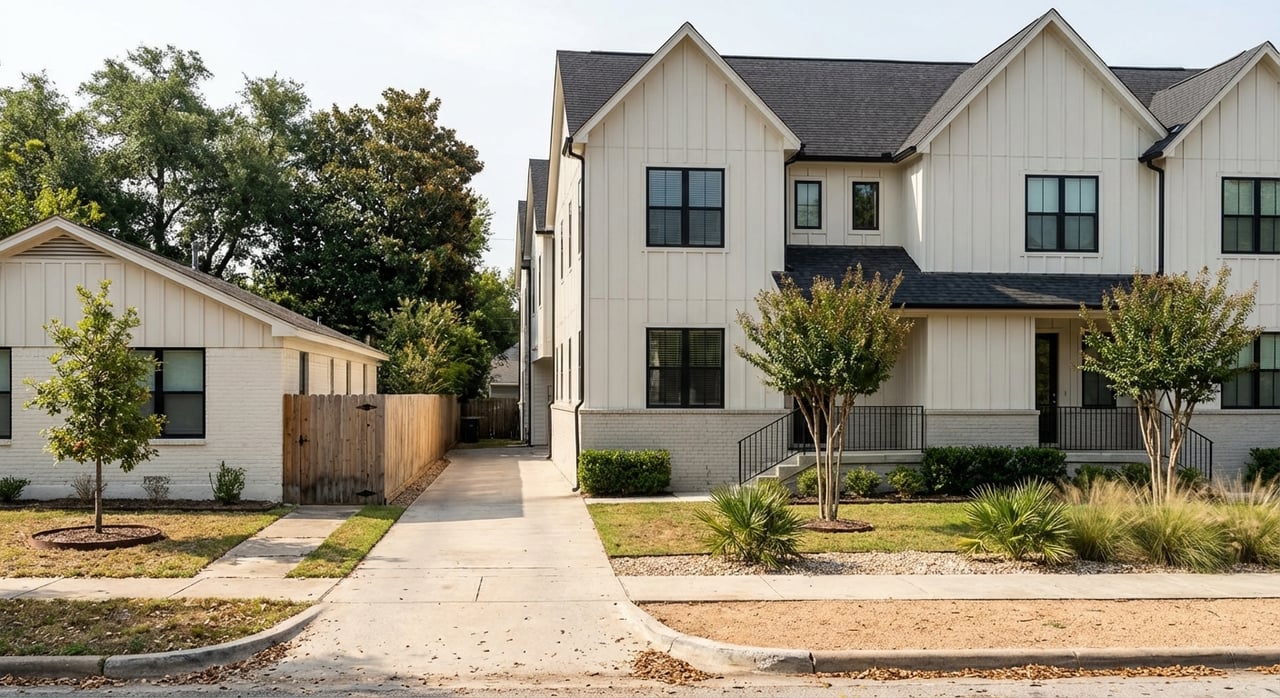
Recent infill around the urban core, including Fifth Ward, has trended toward compact small‑lot single‑family and townhome products, along with targeted single‑family rehabs. Research from Rice University’s Kinder Institute shows a large wave of small‑lot and townhome development inside the Loop and identifies detached small‑lot townhomes as a major product in several at‑risk neighborhoods, including Fifth Ward. See the Kinder Institute’s discussion on how lot size shapes Houston’s infill.
Infill product types that pencil
Small‑lot detached new builds
These are the classic “detached townhome” style on narrow lots with 2–3 stories and a compact yard. Key checks: the recorded plat and building lines, any Special Minimum Lot Size or Minimum Building Line on the block face, required points of access, and tree, landscape, and parking standards. If a special minimum lot size is in place, you cannot subdivide below that threshold for decades. You can check active designations on the City’s Minimum Lot Size and MBL resources and confirm general requirements at the Development Regulations index.
Attached townhome clusters
Side‑by‑side attached townhomes or clustered narrow‑lot detached units on shared drives are common where block patterns allow multiple units. These layouts typically trigger site‑plan review items that include parking, buffering, and landscape standards. Expect a standard plan review at the Permitting Center under the Development Regulations index.
Value‑add single‑family rehabs
Older bungalows and cottages can work as flips or rentals when the land‑to‑improvement value and scope make sense. Key checks: improvement records and appraised values on the Harris Central Appraisal District, deed restrictions that could limit changes, and whether past work was permitted. Start with parcel data and history on HCAD.
Other small formats
Duplexes, small multiplexes, ADUs where allowed, and cottage courts appear in pockets. Feasibility still turns on lot legality, special minimum lot size or building line rules, and whether units are on separate lots or recorded together as a single lot with multiple dwellings. Confirm classifications and submittals using the City’s Development Regulations index.
Fast deal screen in 5 minutes
Use this quick filter before you burn time on a site visit or a full underwriting model.
- Confirm parcel and jurisdiction. Use HCAD to verify the parcel account and taxing entities. City rules apply inside Houston limits, county rules apply outside.
- Scan the deed and chain of title. Search the Harris County Clerk to spot deed restrictions, liens, or unusual conveyances at the County Clerk records search.
- Check basic physical facts. Lot size, lot width, year built, and improvement value on HCAD show whether this is a land play or a rehab candidate.
- Do a quick environmental and flood look. If near the UPRR site, check the EPA’s Fifth Ward hub for current status and maps at the EPA UPRR overview. For flood zones and finished‑floor questions, search the FEMA Flood Map Service Center.
- Perform a street‑level check. Use recent imagery to gauge nearby new builds, demolitions, and market signals. If you have MLS access, pull very recent nearby comps to sanity‑check pricing.
Deeper diligence in 30–90 minutes
If the quick screen is green, stack these next checks before going under contract.
- Plat and lot legality. Confirm the parcel sits on a recorded lot and whether an amending plat or full replat is needed. The City’s guidance outlines submittals and recordation steps in the Amending Plat Guide.
- Minimum lot size or building line. If a special minimum lot size or MBL is active for the block face, small‑lot splits may be blocked. Check the City’s Minimum Lot Size and MBL resources.
- Permits and nearby activity. Concentrated demo and new‑construction permits can signal active infill corridors. Review current processes at the City’s Development Regulations index.
- Title and covenant detail. Recorded deed restrictions may limit building types or change setbacks. Search covenants and easements through the County Clerk records search. If you see conflicts between a plat and restrictions, consult a title attorney.
- Environmental due diligence. If the parcel is within or near the UPRR study area, plan a Phase I Environmental Site Assessment and be prepared for Phase II if recommended. Follow the EPA UPRR overview for maps, sampling, and community updates.
When selecting comparables, start within 0.25–0.5 miles and a 6–12 month lookback. Filter by product type and lot size. Small‑lot new builds should be compared to similar small‑lot products, not to larger 1950s homes. Use MLS data and corroborate sale dates and improvement values with HCAD.
Timelines, costs, and carrying costs
Typical timelines
- Value‑add single‑family rehab with modest scope can complete in 1–4 months from close. Larger gut rehabs often run 3–6 months or more, depending on permitting and trades. See submittal paths at the City’s Development Regulations index.
- Small‑lot new builds often require entitlement steps. Amending plats or replats can take weeks to a few months depending on complexity and hearings. Once permitted, single‑family or townhome construction commonly runs 6–12 months. The City’s process steps are summarized in the Amending Plat Guide.
Construction cost planning
Recent national studies show construction‑only costs in the low to mid hundreds per square foot, with regional variation. In Houston, get three local builder bids and add a 10–20 percent contingency for price movement and unknown site conditions. For context on shifting buyer preferences and cost pressures, review NAHB’s 2024 brief on affordability trends at NAHB.
Carrying costs to include
Budget monthly or prorated carrying costs from close through sale or lease‑up:
- Construction loan interest and fees.
- Property taxes. Pull current appraised values and taxing units on HCAD. Combined Houston rates often fall in the low to mid 2 percent range of taxable value but vary by location.
- Insurance. Include builder’s risk and hazard policies. Add flood insurance if the parcel is in a mapped flood zone. Check the FEMA Flood Map Service Center.
- Utilities, site security, sanitation, and monitoring.
- Marketing, staging, and closing costs if you plan to sell.
- Property management and vacancy if you plan to hold as rentals.
A simple monthly holding‑cost formula:
Monthly holding cost = (Loan balance × interest rate ÷ 12) + (Annual property tax ÷ 12) + monthly insurance + utilities and site security + any HOA or neighborhood assessments ÷ 12.
Add a 5–10 percent monthly buffer for delays.
Local red flags and mitigations
Environmental oversight near UPRR
The Union Pacific Englewood Yard and former Houston Wood Preserving Works site are under active EPA oversight for creosote‑related contamination. If a property is near Liberty Road or the identified study area, plan environmental due diligence early and confirm lender requirements. Follow the EPA UPRR overview for the latest maps, sampling, and community updates.
Flooding and drainage impacts
Fifth Ward has documented drainage needs and a City drainage master plan. Expect finished‑floor elevation, detention, and stormwater design to affect costs and schedules. Review the plan summary at the Fifth Ward Drainage Master Plan and verify flood zones at the FEMA Flood Map Service Center.
Neighborhood protections
Special Minimum Lot Size or Minimum Building Line protections can block new lot splits for decades. Always confirm status with the City’s Minimum Lot Size and MBL resources before you underwrite small‑lot plays.
How The Silva Group helps investors
If you want more than a door‑opener, you need an advisor who speaks finance and construction. The Silva Group brings banking‑grade analysis and infill experience to help you run pro formas, coordinate surveyors and engineers, and navigate platting and permitting steps. We pair that with hyperlocal comp selection, investor‑savvy negotiations, and Compass‑level marketing for your exit.
Our team supports buyer representation for investors and owner‑occupiers, listing and seller representation for new‑construction and redevelopment projects, valuation and market advisory services, neighborhood guides, and developer or new‑construction listings. We also offer bilingual service in English and Spanish.
Ready to run numbers on a specific parcel or want a second set of eyes on a pro forma in Greater Fifth Ward? Connect with The Silva Group for an investor‑ready, step‑by‑step plan.
FAQs
What makes Greater Fifth Ward attractive for infill?
- Proximity to Downtown and a growing pattern of small‑lot and townhome development identified by the Kinder Institute make certain blocks promising when the plat, access, and environmental checks are favorable.
How does Houston’s lack of zoning affect my Fifth Ward project?
- Use and density depend on subdivision and development rules under Chapter 42, plus site‑plan, parking, tree, flood, and building code requirements managed by the City’s Planning and Permitting departments.
How do I know if I can split a lot on my block?
- Confirm recorded plat status and check for Special Minimum Lot Size or Minimum Building Line protections using the City’s Minimum Lot Size and MBL resources before you model a small‑lot subdivision.
What environmental steps should I take near the UPRR site?
- Order a Phase I Environmental Site Assessment early, model timeline risk, and follow the EPA’s UPRR hub for maps, sampling updates, and any community programs that could affect insurability or finance.
What timelines should I budget for a small‑lot townhome?
- Entitlement and plat steps can take weeks to a few months based on complexity, while permits plus construction often run 6–12 months for a single unit once permitted.
How should I pick comps for a new build in Fifth Ward?
- Use recent closed sales within 0.25–0.5 miles and a 6–12 month lookback, and match product type and lot size so small‑lot new builds are compared to similar small‑lot products.
What carrying costs hit most investors during a build?
- Typical items include construction loan interest, property taxes, builder’s risk insurance, utilities and site security, and marketing or closing costs for flips, plus management and vacancy for rentals.