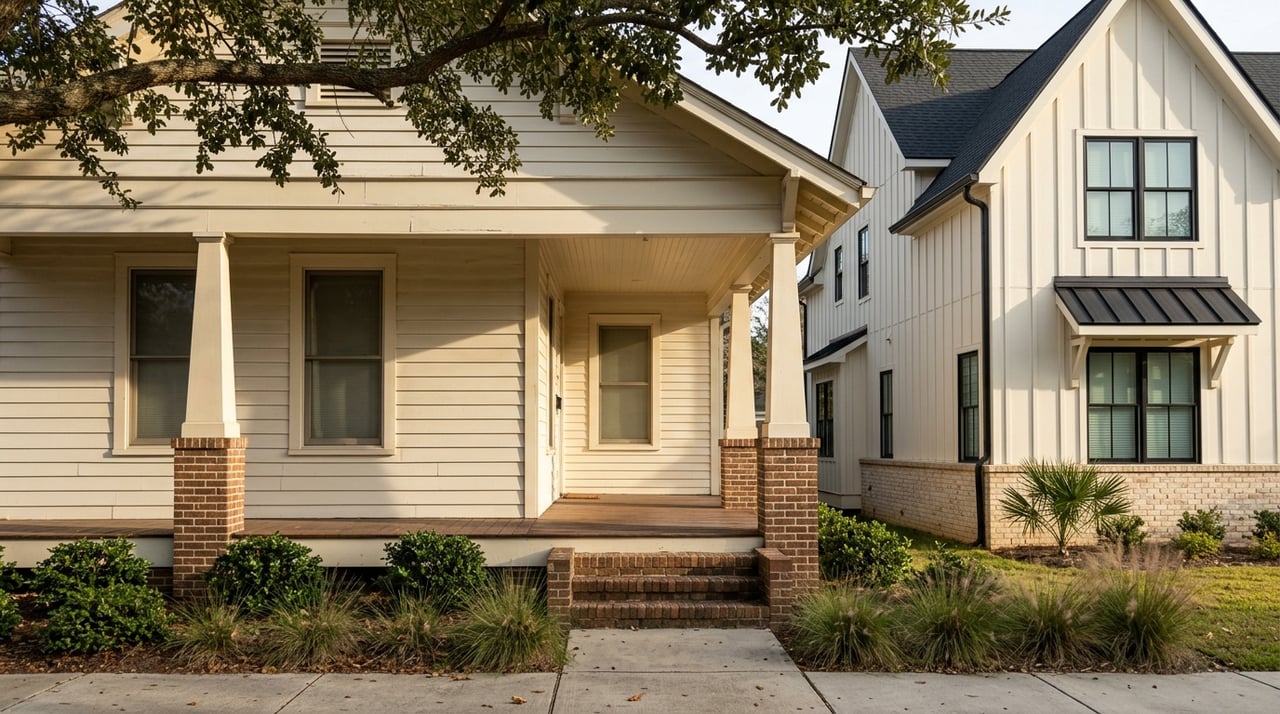
Wondering whether Near Northside gives you better value in a historic home or a newer build? That is a smart question, especially in an inner-loop neighborhood where older housing character, transit access, and redevelopment all show up in the same few square miles. If you are thinking about buying, selling, or sizing up your options in Near Northside, this guide will help you understand how the neighborhood’s historic homes and newer construction fit together. Let’s dive in.
Near Northside at a glance
Near Northside sits just north of Downtown Houston and connects through Main Street, with access tied into I-45 and I-10. City planning maps also place it within a broader freeway network that includes I-610 and the Hardy Toll Road. That location gives you an inner-loop setting with strong access to job centers, transit, and major corridors.
The neighborhood does not read like a purely residential area. The City of Houston describes a mixed residential and commercial urban fabric shaped by rail infrastructure, with a major rail yard on the southern edge and another on the eastern border. North Main and Fulton serve as major commercial corridors, which helps explain why the area feels both historic and active.
Why historic homes define Near Northside
Historic housing is one of the clearest features of Near Northside. The city describes the southern two-thirds of the area as having older Victorian-era gabled wood-frame homes that once housed European immigrants in the 1880s and 1890s. That gives many blocks an established streetscape and a visible connection to Houston’s earlier growth.
In the northern third, Lindale Park stands out for having larger lots and more substantial homes. That does not make it a separate market, but it does show how housing types can shift within the broader neighborhood. If you are comparing homes block by block, those differences matter.
The Texas Historical Commission lists the Near Northside Historic District on the National Register of Historic Places. It was listed in 2010 and is roughly bounded by Little White Oak Bayou, Hogan, I-45 North, and the block between North Main and Keene. For buyers and sellers, that reinforces the area’s reputation for preservation and older housing character.
What buyers often notice in older homes
Historic homes in Near Northside can appeal to buyers who want character that is hard to duplicate in newer construction. Depending on the property, that may include older wood-frame design, traditional rooflines, and modest historic streetscapes. In a close-in Houston neighborhood, that kind of housing stock can feel distinct from more uniform new-build pockets.
At the same time, older homes often vary more from one property to the next. Condition, updates, lot use, and renovation quality can differ significantly, even on the same street. That is why local property-level analysis matters more here than broad assumptions.
Where new builds are showing up
New construction in Near Northside is not appearing evenly across the neighborhood. Based on city priorities, redevelopment is more likely to cluster in corridors and targeted pockets rather than spread across every block. That distinction is important if you are trying to predict where new inventory may emerge.
The Hardy / Near North Side TIRZ states that its purpose includes facilitating affordable housing, encouraging transit-oriented mixed-use development, and funding improvements to roadways, sidewalks, utilities, and parks. In practical terms, that points to public support for growth in places where infrastructure and mobility can support it. Buyers, sellers, and investors should read that as a sign of intentional redevelopment, not random change.
The city’s Opportunity Zones active-projects page also lists Marquette Near Northside, a 250-unit, five-story multifamily project on North Main Street near White Oak Music Hall. That project supports the idea that newer development is showing up along visible corridors. If you are shopping for a new build or evaluating a nearby property, corridor location is a key part of the story.
What newer construction can offer
Newer homes and redevelopment projects can attract buyers who want lower-maintenance living, more contemporary layouts, or proximity to transit-oriented areas. In a neighborhood like Near Northside, new construction may also appeal to buyers who want an inner-loop location without taking on the scope of work that some older homes require. That can make newer inventory especially relevant for busy professionals, move-up buyers, and investors.
For sellers, nearby new development can also change how buyers view the area. It may expand the pool of people considering Near Northside, especially those already looking in central Houston growth corridors. Still, value depends on the specific location, property type, and surrounding block pattern.
Transit is a major part of the appeal
Near Northside stands out because it combines preserved housing with strong mobility options. METRO’s Red Line serves the area with stops including Moody Park, Quitman / Near Northside, Burnett Transit Center / Casa de Amigos, and Fulton / North Central. METRO also operates a Community Connector within most of Near Northside on weekdays.
That layered mobility picture matters whether you plan to live in the neighborhood or hold property there. Rail access, connector service, and freeway connectivity all contribute to the area’s practical appeal. For many buyers, that is part of what makes Near Northside feel like a true inner-loop neighborhood instead of just a close-in address.
Parks, civic anchors, and everyday feel
Near Northside is not just about housing stock. The city identifies Moody Park as an important gathering place, and it highlights the Davis High School, Marshall Middle School, and Carnegie Library complex as a major civic anchor. Those features help shape the neighborhood’s daily rhythm and public identity.
The super neighborhood profile also lists Avenue Place Park Site, Burnett St. Park, Castillo Park, Fulton Greenspace, and Maxey Park as neighborhood parks and open spaces. For buyers, that adds context beyond the home itself. For sellers, these public spaces can help explain the broader neighborhood lifestyle in a factual, location-based way.
Near Northside is also part of a Walkable Places pilot area. The city selected it because of its proximity to downtown and its role in connecting bike planning, capital improvements, transit corridor planning, and Hardy Toll Road planning. That tells you the public realm is part of the neighborhood’s long-term conversation.
Historic homes versus new builds
If you are comparing housing options in Near Northside, the choice usually comes down to priorities rather than a simple right-or-wrong answer. Historic homes and new builds serve different goals, and both can make sense depending on your timeline, budget, and comfort with renovation or redevelopment.
| Option | What stands out | Best fit for |
|---|---|---|
| Historic homes | Older housing character, established streetscapes, preservation context | Buyers who value character and are comfortable evaluating condition closely |
| New builds | Contemporary layouts, corridor-based redevelopment, lower-maintenance appeal | Buyers who want newer features or prefer growth-oriented pockets |
For buyers, the key is to look beyond style and focus on block-by-block context. In Near Northside, transit access, corridor proximity, historic district context, and redevelopment patterns can all influence how a property fits your goals. A house that looks great online may feel very different once you understand where it sits within the neighborhood.
For sellers, positioning matters just as much. A historic home should be marketed around its location, character, and place within the neighborhood’s older housing fabric. A newer home should be framed around layout, finishes, and how it connects to the area’s transit-oriented and inner-loop appeal.
What this means for buyers and sellers
If you are buying in Near Northside, it helps to narrow your search by property type first. Decide whether you want the character and variability of older homes or the predictability of newer construction. From there, compare specific blocks, transit access, and redevelopment activity instead of treating the whole neighborhood as one uniform market.
If you are selling, pricing and positioning should reflect the exact product you have. A historic property and a recent build may attract different buyers, even if they are close together geographically. Clear valuation, strong neighborhood context, and a realistic view of nearby inventory are essential.
That is where local guidance can make a real difference. Near Northside is one of those Houston neighborhoods where broad market headlines only tell part of the story. You need street-level context, a strong valuation framework, and a practical understanding of how historic character and new development interact.
If you are thinking about buying, selling, or valuing a home in Near Northside, The Silva Group can help you make sense of the numbers, the housing mix, and the neighborhood’s evolving opportunities.
FAQs
What kind of homes are common in Near Northside Houston?
- Near Northside is known for older Victorian-era gabled wood-frame homes in much of the area, with larger lots and more substantial homes in Lindale Park, plus newer construction and redevelopment in select pockets.
Where is new construction happening in Near Northside Houston?
- Based on city priorities, new construction and redevelopment are more likely to cluster along corridors and redevelopment areas, especially where transit-oriented mixed-use development and infrastructure improvements are being encouraged.
Does Near Northside Houston have rail transit access?
- Yes. METRO’s Red Line serves the area with stops including Moody Park, Quitman / Near Northside, Burnett Transit Center / Casa de Amigos, and Fulton / North Central, and a weekday Community Connector operates within most of the neighborhood.
Is Near Northside Houston a historic district?
- Part of the area is recognized as the Near Northside Historic District, which the Texas Historical Commission lists on the National Register of Historic Places and notes was listed in 2010.
What makes Near Northside Houston appealing to buyers?
- Many buyers are drawn to Near Northside for its combination of historic housing character, inner-loop location, access to downtown, transit options, parks, and corridor-based redevelopment.
How should sellers price a home in Near Northside Houston?
- Sellers should base pricing on the exact property type, condition, location, and nearby inventory because historic homes and newer builds can compete differently even within the same neighborhood.