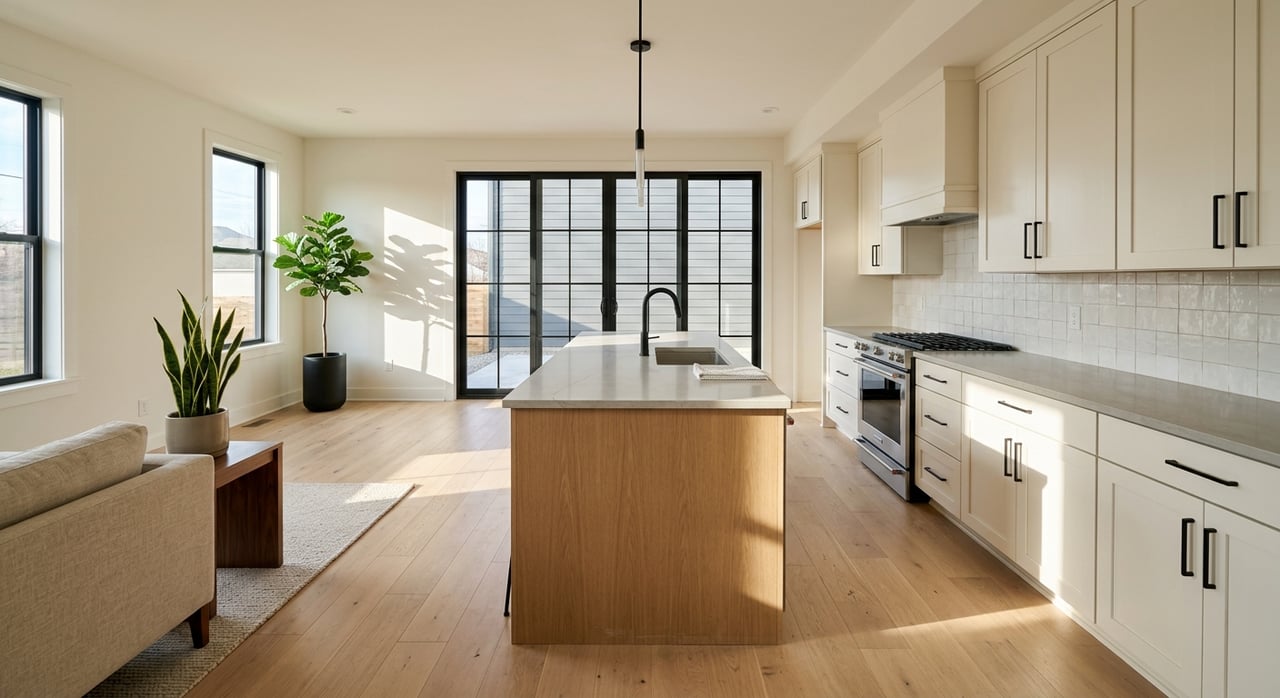
Wondering whether you should fix up your home or sell it as is in Central Northwest Houston? It is a common question, especially in an area where many homes are older and buyers have more choices than they did a few years ago. If you are trying to protect your bottom line, this guide will help you weigh the numbers, the timeline, and the type of work your home really needs. Let’s dive in.
Central Northwest market context
Central Northwest Houston has a broad mix of homes and price points, which means your decision should be based on your specific pocket, not just a neighborhood-wide average. According to the City of Houston’s 2023 demographic tables, the area had 20,188 housing units, 90.9% occupied, with 61.7% owner-occupied and 38.3% renter-occupied. The same data shows a 2023 median house value estimate of $478,310.
The housing stock is also older than many sellers realize at first glance. City data shows that 67.7% of housing units in Central Northwest were built before 1980, while only 15.3% were built in 2010 or later. That matters because older homes often come with longer repair lists, and not every update will pay you back at closing.
There is also a wide spread in home values across the area. City housing-value tables show thousands of owner-occupied homes in the $200,000 to $299,999 range, the $300,000 to $499,999 range, and the $500,000 to $999,999 range, plus more than 1,000 units valued at $1,000,000 or more. In practical terms, that means micro-local comparable sales matter more than broad averages.
Why this decision is harder now
In a faster seller’s market, you might get away with listing a home that needs work and still attract strong offers. That is not the same environment sellers face today in Northwest Houston. HAR’s April 2026 update described Northwest Houston as a buyer’s market with 7.7 months of inventory, 46.7 days on market, and a median sold price of $284,419.
That extra competition changes the math. Buyers tend to notice condition more, compare more homes, and negotiate harder when a property needs repairs or feels dated. In this kind of market, pricing discipline and presentation matter more.
The broader Greater Houston market also shows a slower pace than many sellers remember from recent years. HAR’s March 2026 update reported 4.7 months of inventory, 67 days on market, and a median single-family price of $330,000. For you, that means the wrong pre-listing renovation can cost time and money without creating enough additional value.
When renovating makes sense
Not every project is worth doing before you sell. The best pre-listing updates are usually the ones buyers see right away, understand easily, and do not require a long construction timeline. In many cases, modest cosmetic work can improve first impressions without dragging you into a major remodel.
The 2025 Remodeling Impact Report found that buyers are less willing to compromise on home condition than in the past. It also found that modest projects often recover more of their cost than large-scale renovations. Examples with strong cost recovery included a new steel front door, closet renovation, fiberglass front door, and new vinyl windows.
For sellers specifically, REALTORS most often recommended painting the entire home, painting one room, and new roofing before listing. They also reported increased buyer demand for kitchen upgrades, new roofing, and bathroom renovation over the last two years. That tells you something important: visible cleanliness and obvious maintenance tend to matter more than luxury-level overhauls.
Best updates before listing
If your home is basically sound and you want to improve marketability, these types of updates are often the most defensible:
- Interior paint
- Exterior touch-up paint where needed
- Basic kitchen refreshes
- Bathroom refreshes
- New front door
- Roofing work if the roof shows clear wear
- Window replacement where condition is affecting appeal
- Closet improvements
- Deep cleaning and decluttering
These projects tend to help because they improve how buyers experience the home right away. They can also be easier to budget and manage than a full renovation.
When selling as is may be smarter
Selling as is can be the stronger option when your home needs major work, the timeline is tight, or the likely resale gain does not justify the investment. This is especially relevant in Central Northwest because so much of the housing stock predates 1980. Older homes can come with structural issues, aging systems, or layered deferred maintenance that quickly turns a simple project into a much larger one.
A buyer-leaning market can make that risk even more important. If you spend heavily on repairs and then still need to price aggressively, your return may not be there. In many cases, the real question is not whether updates would help, but whether they would help enough to cover the cost, stress, and carrying time.
There is also a practical buyer-pool reason to consider an as-is sale. With a mix of owner-occupied and renter-occupied housing in the area, some buyers may prefer move-in ready homes, while others may be open to taking on work in exchange for value. That does not guarantee an as-is home will sell quickly, but it does mean there may be a market for the right property at the right price.
Signs as-is could be the better route
Selling as is may be worth serious consideration if your home has:
- Structural concerns
- Extensive deferred maintenance
- Multiple aging systems at once
- Work that likely needs permits and inspections
- Repairs that could uncover more hidden costs
- A timeline that does not allow for months of prep
- A renovation budget that feels risky or uncertain
In those situations, a clean as-is strategy with realistic pricing can outperform an over-improved listing.
Houston permit rules matter
One of the biggest reasons sellers underestimate renovation risk is the permitting process. In Houston, the line between cosmetic work and major work can be a big deal for both timing and stress. The Houston Permitting Center states that a building permit is required for most residential projects inside city limits, including remodeling, while painting and wallpapering are excluded.
The city also notes that general repairs usually do not require plans, and re-roof or roof repairs do not require plans in most cases. That makes cosmetic and maintenance-focused updates easier to evaluate before listing. They can often improve presentation without creating a long pre-market delay.
Larger projects are different. The city says most renovations, repairs, and additions require plan approval before permit purchase, and a single-family interior remodel, repair, or conversion permit requires plan review and inspection. In some floodplain cases, the application can also require a signed and sealed cost estimate or appraisal.
What this means for you
If your project list includes mostly paint, cleanup, and straightforward maintenance, renovation may be manageable. If your list includes layout changes, major interior remodeling, additions, or substantial repairs, the pre-listing timeline can get much longer. That added administrative friction should be part of your decision, not an afterthought.
A simple renovate-or-sell framework
You do not need to guess. A practical decision should start with numbers, not emotion. The strongest approach is to compare your likely as-is outcome with your likely after-repair outcome and then measure the gap against cost and time.
Step 1: Review nearby sold comps
Look at recent sold homes in your part of Central Northwest, not just the wider area. Because local values vary so much, homes a few streets away may be better indicators than neighborhood-wide median figures.
Step 2: Estimate after-repair value
Next, estimate what your home could realistically sell for if you completed targeted improvements. This should be based on comparable homes with similar size, condition, and finish level.
Step 3: Separate cosmetic from major work
Break your to-do list into two buckets:
- Cosmetic, visible, permit-light updates
- Major, permit-heavy, structural, or high-risk repairs
This step is where many sellers gain clarity. A short cosmetic list may support a pre-listing refresh. A long major-work list may point toward selling as is.
Step 4: Price out the work
Get realistic cost estimates, including labor, materials, and a cushion for surprises. If the home is older, surprise costs are especially important to factor in.
Step 5: Compare value lift vs total cost
Now compare the likely resale premium with the full cost of getting there. Include carrying costs, your time, and the risk of delays. If the spread is too thin, an as-is sale may be the better financial move.
What tends to work in Central Northwest
In this part of Houston, the most defensible pre-listing strategy is often a focused one. Small cosmetic upgrades and obvious maintenance items can improve first impressions without pulling you into a long permit path. That aligns well with both the market conditions and what current remodeling data suggests buyers respond to.
By contrast, full-scale remodels need a stronger price justification. In a buyer’s market, it is harder to assume buyers will fully reimburse you for expensive upgrades, especially if your home will still be compared against newer or already-updated listings. A disciplined scope usually beats an ambitious one.
This is where hyperlocal pricing becomes critical. A home in one Central Northwest pocket may justify strategic updates, while a similar home in another pocket may be better positioned as an as-is opportunity. The right call depends on your exact location, condition, and likely buyer audience.
Final takeaway
If your home needs mostly cosmetic work, a targeted refresh may help you compete more effectively in Central Northwest Houston. If it needs major repairs, permit-heavy remodeling, or a long list of expensive fixes, selling as is may protect your time and reduce your risk. The smartest move is the one that balances resale upside against real cost, real timing, and current market conditions.
If you want a data-driven opinion on your home’s likely as-is value versus its potential after targeted updates, The Silva Group can help you evaluate the numbers and build a practical plan for your next move.
FAQs
Should I renovate before selling a home in Central Northwest Houston?
- It depends on the scope of work. Smaller cosmetic updates and visible maintenance are often easier to justify than major remodels in the current market.
Is selling a house as is a good idea in Central Northwest Houston?
- It can be, especially if the home needs structural repairs, permit-heavy work, or extensive updates that may not return enough value at resale.
What home improvements add the most resale value before listing?
- Based on the research provided, sellers often see the best case for visible, practical upgrades such as paint, roofing, front door replacement, kitchen upgrades, bathroom updates, and some window improvements.
Do I need a permit for home renovations in Houston?
- For many residential remodeling projects inside Houston city limits, yes. Painting and wallpapering are excluded, while general repairs usually do not require plans and re-roof or roof repairs typically do not require plans.
Why do comparable sales matter so much in Central Northwest Houston?
- Home values in the area vary widely, so neighborhood-wide averages may miss what buyers are actually paying in your specific pocket.
How do I decide between renovating and selling as is?
- Compare your likely as-is sale price with your estimated after-repair sale price, then subtract the cost, time, and risk of the work. The better option is the one with the stronger net outcome.