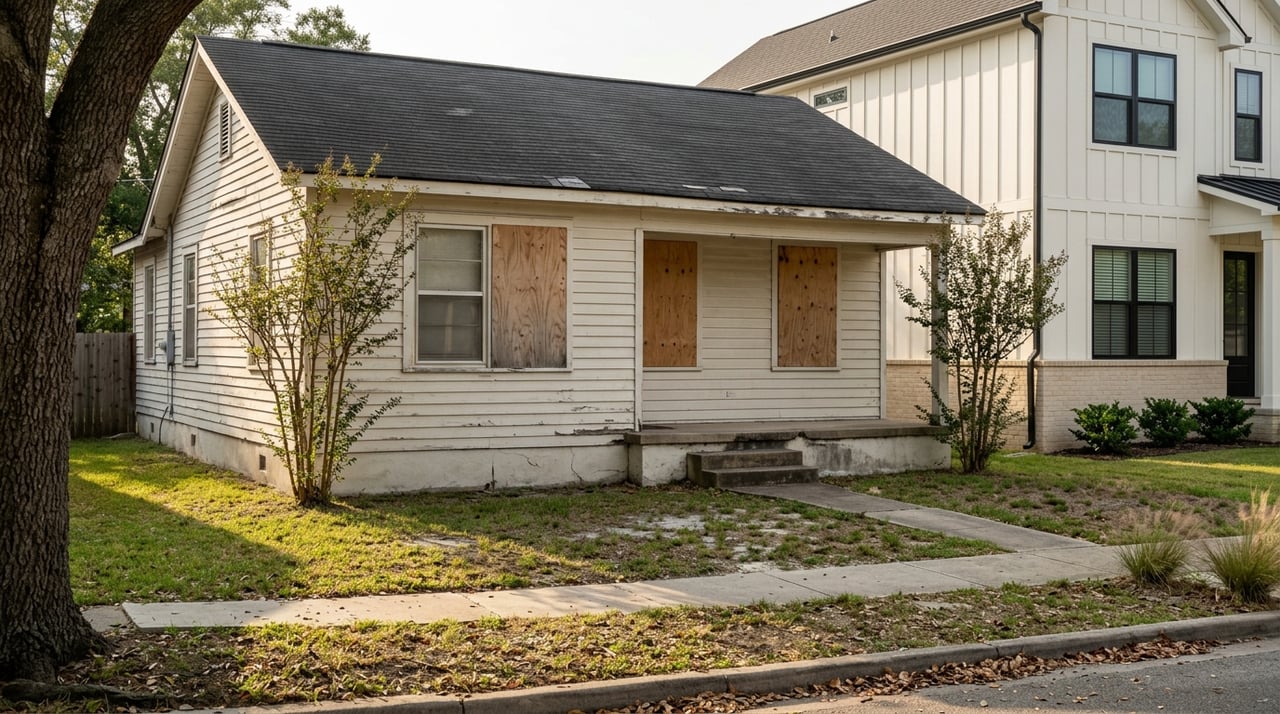
If you own land or an older home in Greater Fifth Ward, you may be sitting on a very different kind of asset than a standard resale house. In this part of Houston, buyers often look past the current structure and focus on what the site can become, how quickly they can move forward, and what hurdles may affect the deal. If you are thinking about selling, this guide will help you understand how land and teardown properties are typically valued, marketed, and negotiated in Greater Fifth Ward. Let’s dive in.
Why land sales work differently here
Greater Fifth Ward sits east of downtown Houston within the City of Houston’s Super Neighborhood 55, generally bounded by Buffalo Bayou, Lockwood Drive, Liberty Road, and Jensen Drive. The area is part of ongoing public planning around flooding, extreme weather, environmental risk, housing stability, and infrastructure upgrades.
That context matters because buyers are not just comparing your property to a typical move-in-ready home. They are looking at redevelopment potential, site constraints, and how your parcel fits into a changing neighborhood landscape.
The broader market is also more active than many sellers assume. Redfin reported a median sale price of $311,095 in May 2026 for Greater Fifth Ward, with an average of 83 days on market and prices up 8.2% year over year. Even when a sale is really about the land, buyers are still making decisions based on live market conditions rather than automatic discount pricing.
What buyers value most
When you sell a teardown home or vacant lot, the biggest question is usually not the condition of the existing structure. The bigger question is what a buyer can legally and physically do with the site.
Houston does not use zoning in the way many other cities do. Instead, development is shaped by subdivision and platting rules, minimum lot size and minimum building line standards, and city review of building and code requirements.
That means value often comes down to buildability. A buyer may ask whether the parcel is already platted, whether it can be replatted, whether setbacks or easements limit the building envelope, and whether the lot works better as a standalone build site or part of a larger assemblage.
HCAD’s valuation approach also helps explain why. HCAD notes that land value is influenced by lot size, site characteristics, and related factors, and small lot-size differences below the neighborhood base lot may have limited impact on sale price. In practical terms, a few extra square feet may matter less than frontage, layout, access, and redevelopment utility.
Buildability often drives price
For many Greater Fifth Ward sellers, the real value is tied to what can happen next on the property. If the existing house is functionally obsolete, heavily deferred, or no longer aligns with the site’s highest and best use, buyers may treat the improvement as secondary.
This is especially true when the property is being evaluated for infill construction. In that case, a buyer may care more about dimensions, plat status, and site access than interior finishes or cosmetic updates.
Appraisal context matters too
HCAD also notes that vacant land and non-homestead rental or business property are generally appraised at market value rather than under the homestead cap. That means sellers should be careful about comparing a land-heavy or investor-owned property to an owner-occupied resale home with capped taxable value history.
A strong pricing strategy starts with the right category of comparison. For land or teardown sales, that usually means focusing on development utility, not just traditional home resale metrics.
Site details that can affect your sale
Before a buyer makes a strong offer, they usually want clarity on a few core site issues. These details can influence both pricing and timeline.
Lot size and dimensions
Lot width, depth, and frontage all matter. A parcel may look large enough on paper, but if its dimensions do not support a practical building footprint, that can limit buyer interest or lower value.
In some cases, subdivision rules and minimum lot size standards can affect what a buyer can do next. Existing structures may remain, but future subdivision or redevelopment plans can still face restrictions.
Platting and replatting status
Undeveloped land must be platted before development begins in Houston. Already platted land can sometimes be replatted to change lot layout, setbacks, easements, or use.
For a seller, this matters because a buyer may pay more for a parcel with a simpler path forward. If the buyer expects to replat or subdivide, they may build that time and uncertainty into the offer.
Access, setbacks, and easements
Street access, building lines, setbacks, and easements can shape what gets built and where. The Planning Commission reviews plats for Chapter 42 compliance, so these are not minor details.
If your property has unusual access issues or utility easements, that does not automatically kill value. It does mean your marketing and pricing need to reflect the site realistically.
Assemblage potential
Some parcels attract interest because they work well on their own. Others are more valuable as part of a larger assemblage.
If your property sits next to other redevelopment candidates, its value may be tied to what a builder or investor can do by combining sites. In those situations, strategy matters just as much as square footage.
Timing can vary more than a normal home sale
A teardown or land deal can close quickly, but not every deal does. The timeline often depends on title clarity, diligence needs, and whether the buyer needs city approvals before moving forward.
TREC includes a separate Unimproved Property Contract among its standard forms, which is often the most relevant form family for vacant lots and land-heavy sales. These transactions are commonly structured around title review, a negotiated diligence window, and a clear review of buildability.
Option periods and diligence
TREC states that the termination option is a negotiable contract term. In practice, that can give a buyer time to inspect the property, review title matters, and request amendments based on what they learn.
For sellers, this means the highest offer is not always the strongest offer. A buyer with a realistic diligence scope and fewer redevelopment contingencies may deliver a smoother path to closing.
Plat approval can add time
The city’s platting process is one of the biggest local timing variables. The Planning Commission generally must act within 30 days on plats, and items can be deferred twice.
If a buyer needs planning approval before construction can begin, that can stretch the deal timeline. Sellers should understand early whether they are marketing a ready-to-close site or a site that comes with extra entitlement steps.
Environmental review can shape buyer demand
In parts of the Fifth Ward and Kashmere Gardens area, environmental review may be an added layer of diligence. EPA states that it is still investigating the former Union Pacific wood-preserving site, and the City has suspended certain HCD homebuyer assistance and home-repair programs within the sampling-zone boundaries during the investigation.
That does not mean every nearby parcel is unmarketable. It does mean buyers may ask more questions, spend more time on review, and price risk differently depending on the exact location.
For sellers, block-level context matters. The more clearly you understand your property’s location and likely diligence concerns, the better you can prepare for negotiations.
Marketing a Greater Fifth Ward land sale
A good land listing does more than say “great investment opportunity.” Buyers in Greater Fifth Ward often need a sharper story backed by facts about the site and its path to redevelopment.
The neighborhood has several redevelopment signals that support interest from builders and investors. The City’s Neighborhood Resilience Plan points to economic growth, housing upgrades, infrastructure improvements, and risk-mitigation efforts. The Houston Land Bank and the City’s housing department also operate programs that move vacant, abandoned, damaged, or tax-foreclosed properties toward new homes and builder-ready lots.
Know your likely buyer pool
Your buyer may not be a traditional homeowner. Depending on the parcel, likely buyers can include:
- Small builders
- Infill developers
- Affordable housing operators
- Local investors
- Buyers looking for a custom new-build site
When you know who the likely buyer is, you can frame the property around the details that matter most to that audience.
Match the message to the block
Not every Greater Fifth Ward site should be marketed the same way. Some parcels are best positioned around redevelopment potential, while others may fit better as preservation-compatible infill.
That is especially important near Lyons Avenue, where the City’s preservation office is pursuing National Register recognition for a four-block stretch and describes the corridor as historically significant. In those areas, location context may influence how buyers think about the right next use.
How to think about pricing
For many land and teardown sales, pricing works like a residual land question. Buyers want to know what they can build, how quickly they can get there, and what extra review or approval steps will be required.
In Greater Fifth Ward, pricing often depends on a mix of factors:
- Current plat status
- Lot dimensions and frontage
- Access, setbacks, and easements
- Environmental-review considerations
- Single-lot buildability versus assemblage potential
- Alignment with active infill and redevelopment patterns
This is why pricing a teardown like a standard resale home can leave money on the table or slow the sale down. The most effective strategy is to position the property based on redevelopment utility and market it with enough detail for serious buyers to act.
Why local strategy matters
Selling land or a teardown in Greater Fifth Ward requires more than posting photos and waiting for offers. You need a pricing strategy grounded in site utility, a marketing plan that speaks to the right buyer, and a clear understanding of the timing issues that can affect closing.
That is where neighborhood knowledge and development fluency can make a real difference. When you understand how buyers underwrite these properties, you are better positioned to price accurately, negotiate confidently, and avoid surprises during diligence.
If you are weighing a sale in Greater Fifth Ward, The Silva Group can help you evaluate your property through both a neighborhood and redevelopment lens.
FAQs
What affects land value in Greater Fifth Ward most?
- Buildability usually matters most, including lot dimensions, frontage, plat status, access, setbacks, easements, and whether the site supports redevelopment or assemblage.
What contract is commonly used for vacant land sales in Texas?
- TREC lists an Unimproved Property Contract among its standard forms, and land deals are often structured around title review, diligence, and buildability analysis.
What can slow a teardown sale in Greater Fifth Ward?
- Title issues, redevelopment contingencies, platting or replatting needs, and environmental-review questions can all extend the timeline.
What should sellers disclose through marketing for Greater Fifth Ward land?
- Sellers should clearly present factual site details such as lot dimensions, access, plat status, and any known issues that affect redevelopment review or timing.
What kinds of buyers look for teardown homes in Greater Fifth Ward?
- Depending on the site, buyers may include builders, small developers, affordable housing operators, local investors, or buyers seeking a new-build lot.